A First-Timer's Guide to Buying Jewelry Online in 2026
Buying jewelry online used to feel risky. In 2026, the picture looks very different. Here's how to shop with absolute confidence.
In this guide:
Buying jewelry online used to feel risky. You couldn't touch the piece, couldn't see how it caught the light, couldn't be sure what would actually arrive at your door. That hesitation made sense — once.
In 2026, the picture looks very different. Over 1.9 billion people now buy jewelry through digital channels, representing more than 26 percent of all global jewelry transactions. The tools available to online shoppers today — 360-degree diamond viewers, AR try-on features, live gemologist consultations, and verified certification databases — have largely closed the gap between clicking "add to cart" and walking into a store. For first-time buyers in particular, knowing how to use these tools is the difference between a confident purchase and an expensive mistake.
This guide covers everything you need: the trends shaping what people are buying right now, the non-negotiables to check before you buy anything, a comparison of the most trusted platforms, and honest answers to the questions first-timers are always afraid to ask.
The Market at a Glance
The numbers tell a clear story. The global online jewelry market is projected to grow from $33 billion in 2026 to nearly $70 billion by 2035, expanding at a steady rate of just under 10 percent annually. In the US alone, more than 56 million consumers buy jewelry online every year.
The average online jewelry order now sits at $374 — but personalised and engraved pieces command a significantly higher average of $527, reflecting how much buyers are willing to pay when a piece feels specific to them. Fine jewelry accounts for roughly 46 percent of US online sales, with fashion jewelry and custom pieces splitting most of the remainder.
Perhaps most tellingly: more than 58 percent of online shoppers compare at least three platforms before purchasing. If you're reading a guide like this one, you're already doing it right.
What's Trending in 2026
Understanding what's popular right now won't just help you pick something beautiful — it'll help you spot which retailers are keeping up and which are not.
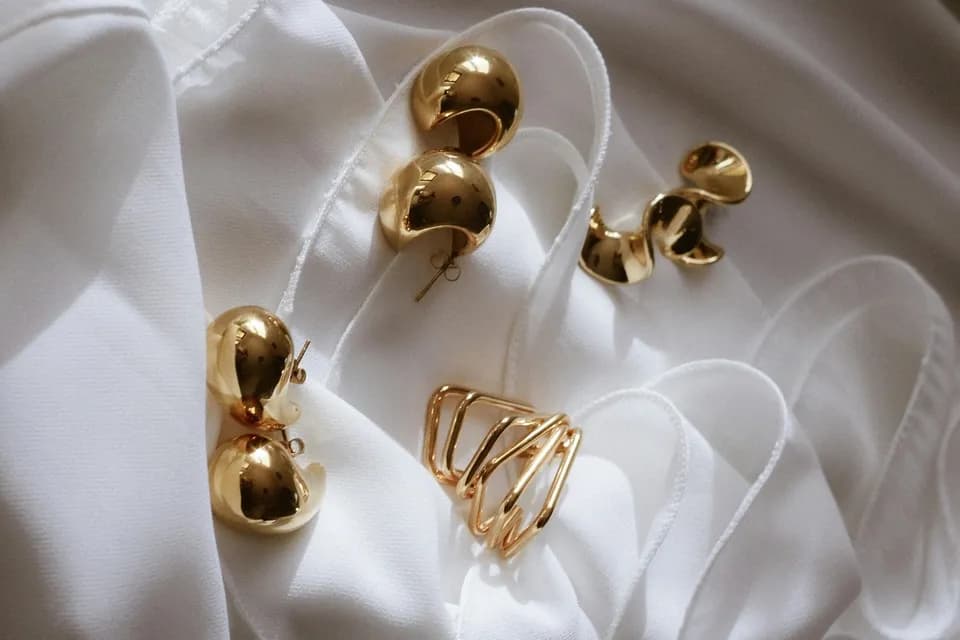
Bold is officially back. After years of quiet luxury and barely-there layering, maximalist design is leading both runways and retail. Chunky gold cuffs, sculptural silver, and oversized statement earrings are among the most searched jewelry items of the year. Chunky chain styles alone saw a 120 percent increase in online searches over the past twelve months.
Personalization is driving the biggest purchases. Custom and personalised pieces — engraved bands, birthstone settings, initials, meaningful dates — now account for around a third of all online jewelry orders. These are not impulse buys. Buyers researching personalised pieces spend more time, compare more options, and spend more money. If you want something that will last, this is the category worth exploring.
Vintage-inspired designs are holding strong. Pieces that feel rooted in a specific era — Art Deco geometry, Victorian filigree, mid-century solitaires — grew 25 percent in online sales last year. The appeal is permanence: buyers want pieces that feel like they were always meant to exist, not just products of the current moment.
Lab-grown diamonds have crossed the mainstream threshold. Lab-grown diamonds now represent 21 percent of all online diamond sales, with year-on-year growth of 50 percent. They are chemically identical to mined stones, certified by the same bodies (GIA, IGI), and typically cost 60 to 80 percent less. For a first-time buyer, they represent one of the most significant value shifts the jewelry market has seen in decades.
Social commerce is where discovery happens. Around 28 percent of jewelry discovery among younger buyers now happens on TikTok and Instagram. If you've seen a piece online and fallen for it, you are not alone — and many of the best retailers have built their entire presence around that moment of discovery.
What to Check Before You Buy Anything
This is the section that will save you money and regret. Whether you're spending $150 or $5,000, these are the five things every first-time buyer should verify before completing a purchase.
1. Certification
For diamonds and fine gemstones, always look for an independent grading certificate. GIA (Gemological Institute of America) and AGS (American Gem Society) are the gold standards for diamonds in the US market. IGI is widely accepted for lab-grown stones. Any reputable retailer will provide this documentation automatically — if you have to ask twice, that's a warning sign.
2. Metal Markings and Purity
Gold jewelry should clearly state its karat: 10k, 14k, 18k, or 22k. Sterling silver should be marked 925. Avoid any listing that uses vague terms like "gold-tone," "gold-plated," or "silver-coloured" without further specification unless you are knowingly buying fashion jewelry and pricing accordingly.
3. Return and Exchange Policy
A trustworthy online jewelry retailer offers a minimum 30-day return window with insured return shipping. Many of the best brands offer 60 to 100 days. If a retailer does not state its return terms clearly on the product page, do not buy from them. This is non-negotiable.
4. Product Visuals
Can you see the actual piece you're buying — not just a stock render? The best online jewelry platforms now offer 360-degree video of individual stones, zoom tools, and real-product photography. If a retailer relies exclusively on CGI imagery or model shots without real product close-ups, that should give you pause.
5. Customer Reviews and Post-Purchase Support
Look beyond the star rating. Read reviews that mention packaging quality, delivery timelines, accuracy of product description, and how the retailer handled any problems. Brands with a long track record of genuine, detailed reviews are almost always the safer choice over a newer platform with only five-star ratings and no written feedback.
Trusted Platforms: Quick Comparison
| Store | Best For | Price Range | Certification | Free Returns |
|---|---|---|---|---|
| James Allen | First-time buyers, transparency | $300 – $30,000+ | GIA | 30 days |
| Brilliant Earth | Ethical & lab-grown | $200 – $20,000+ | GIA + ethically sourced | 30 days |
| Blue Nile | Engagement rings, milestone pieces | $500 – $50,000+ | GIA / AGS | 30 days |
| Mejuri | Everyday fine jewelry | $50 – $3,000 | Conflict-free | 30 days |
| With Clarity | Customisation, home preview | $400 – $25,000+ | IGI / GIA | 30 days |
Trusted Stores Worth Knowing
James Allen — Best for First-Time Buyers
James Allen built its reputation on one idea: show the customer everything. Every stone in their inventory is photographed in 360-degree HD, meaning you can inspect a diamond's inclusions, symmetry, and light performance before spending a dollar. They also offer real-time video consultations with gemologists — a feature that is particularly valuable if this is your first significant jewelry purchase and you want a human to walk you through what you're looking at. For anyone new to this, James Allen removes more uncertainty than any other platform.
Brilliant Earth — Best for Ethical and Lab-Grown
Brilliant Earth has been a leader in responsible sourcing since 2005, and their lab-grown collection is among the most comprehensive available online. Beyond their standard GIA-certified stones, their Capture Collection uses diamonds grown from carbon captured before it can enter the atmosphere — a genuinely innovative product for buyers who want their purchase to carry a positive environmental footprint. With over 40 US showrooms and a strong online presence, they combine the accessibility of digital shopping with the reassurance of a physical presence.
Blue Nile — Best for Milestone Purchases
Blue Nile remains the benchmark for engagement rings and significant diamond purchases. They account for around 8 percent of all US online engagement ring sales — a figure that reflects consistent trust over a long period. Their customisation tools are industry-leading, allowing buyers to pair a certified stone with their chosen setting and see the result in detail before committing. If you are spending a meaningful sum on a piece that marks a milestone, Blue Nile's combination of transparency, certification, and customer service is hard to match.
Mejuri — Best for Everyday Fine Jewelry
Mejuri democratised fine jewelry. With a starting price point around $50 and a design aesthetic that sits somewhere between minimal and quietly bold, they have built a loyal following among buyers who want real gold and genuine stones without the traditional jewelry store experience or markup. Their direct-to-consumer model means the savings go to the buyer, not the middleman. If you want to start building a collection of pieces you'll actually wear every day, Mejuri is the most accessible entry point.
Expert Perspective
The shift happening in jewelry retail right now is not just about price or convenience — it's about meaning. As one industry observer put it, personalised pieces "carry layered meaning — something only the wearer fully understands." Buyers in 2026 are not chasing trends. They are investing in pieces that mark relationships, milestones, and moments of personal significance. That shift in motivation is why the most successful online retailers are the ones that invest in education, transparency, and genuine guidance — not just product photography and checkout speed.
For first-time buyers, this is actually good news. It means the best platforms are designed to help you understand what you're buying, not simply to close a sale.
Frequently Asked Questions
Is it actually safe to buy fine jewelry online?
Yes — provided you shop from retailers that offer independent certification, insured shipping, and a clear returns policy. Nearly 29 percent of first-time online jewelry buyers cite authenticity concerns as their biggest hesitation. The answer to that concern is always certification: a GIA or IGI grading report is a verifiable document that confirms exactly what you are paying for.
What's the difference between 14k and 18k gold?
Karat refers to the purity of the gold. 24k is pure gold, but pure gold is too soft for most jewelry. 18k gold is 75 percent gold, offering a rich colour and good durability. 14k gold is 58.5 percent gold, making it more durable and more affordable — it is the most common choice for everyday fine jewelry in the US market. 10k is the minimum that can legally be called gold in the United States.
How do I find my ring size without visiting a store?
Most reputable online retailers provide a printable ring sizer or a downloadable measurement guide. Alternatively, a local jeweler will measure your finger for free in under a minute, with no obligation to buy. For rings you plan to wear daily, getting a professional measurement is always worth the five minutes it takes.
What does a GIA certificate actually tell me?
A GIA grading report confirms the 4Cs of a diamond: cut, colour, clarity, and carat weight. It also includes measurements, a plot of any inclusions, and a unique report number that can be verified on GIA's public database. When buying a diamond online, always cross-reference the certificate number on the GIA website before completing your purchase.
Are lab-grown diamonds worth buying?
For most buyers, yes. They are chemically and visually identical to mined diamonds, carry the same certifications, and cost significantly less — often 60 to 80 percent less for the same stone specifications. The primary trade-off is resale value, which is currently lower for lab-grown stones. If you are buying a piece to wear and love rather than to resell, lab-grown is one of the most straightforward value decisions in fine jewelry today.
The Bottom Line
Buying jewelry online in 2026 is more accessible and more secure than it has ever been. The tools available to consumers — from 360-degree stone viewers to live consultations to verified certification databases — have fundamentally changed what it means to buy fine jewelry without walking into a store.
The keys remain the same regardless of platform: prioritise certification, understand what you are paying for, and choose a retailer with transparent policies and a track record you can verify. Start with a platform that educates you rather than one that just sells to you. Take your time. Ask questions.
The right piece is out there — and now you know exactly how to find it.
Prices and availability are subject to change. Always verify certifications directly with the retailer before purchasing. This article does not constitute financial advice.

About Emma Kelly
Emma is a certified gemologist and former luxury jewelry buyer with over 10 years of experience navigating the diamond district. She specializes in finding high-value alternatives for modern couples.